About the Workshop
Real-world spatiotemporal systems (e.g., transportation and maritime networks) produce heterogeneous, evolving data with strong spatial dependencies and long-range temporal dynamics. This half-day workshop connects operational challenges with modern learning methods—such as graph and sequence models, state-space approaches, and constraint-aware learning—to support robust prediction and decision-making in complex real systems.
The Organizing Committee
| Photo | Name | Affiliation |
|---|---|---|
 |
Professor Junbin Gao Professor |
Discipline of Business Analytics The University of Sydney |
 |
Dr. Zhiqi Shao Assistant Professor |
School of Economics and Business Administration Chongqing University |
 |
Mr. Jiayu Fang Researcher |
Discipline of Business Analytics The University of Sydney |
 |
Professor Michael Bell Professor |
ITLS The University of Sydney |
 |
Dr. Ze Wang Researcher |
ITLS The University of Sydney |
 |
Dr. Haoning Xi Senior Lecturer |
Business School The University of Newcastle Business School |
 |
Dr. Shoujin Wang Lecturer |
The Data Science Institute University of Technology Sydney |
Speakers
| Speaker Name | Affiliation & Bio |
|---|---|
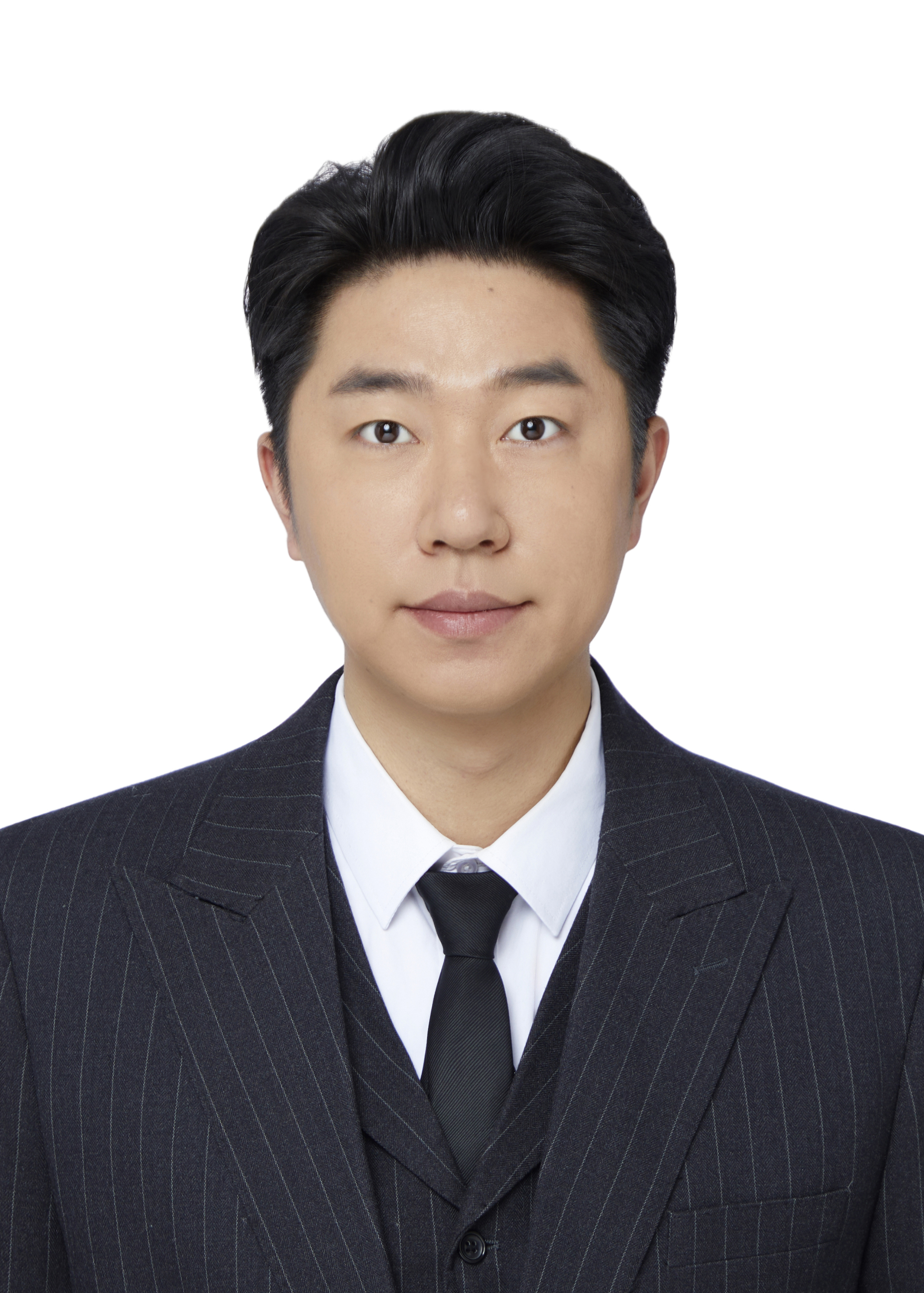
Dr. Xusheng Yao |
Northeastern University (China) Xusheng Yao is a Lecturer at Northeastern University (China). He holds a bachelor’s degree in Information Management and Information Systems from Northeastern University (China), and a Ph.D. degree in Management Science and Engineering from Tianjin University (China). He uses quantitative (survey and econometrics methods), and machine learning approaches to address issues related to urban transportation management and sustainable transportation. He has published several papers in reputed peer-reviewed international journals such as Technological Forecasting and Social Change, Transportation Research Part A: Policy and Practice (TRA), Decision Support Systems (DSS), Energy Policy, Transportation Letters, and Empirical Economics. |
|
Talk Topic Title: To be announced Abstract: To be announced |
|
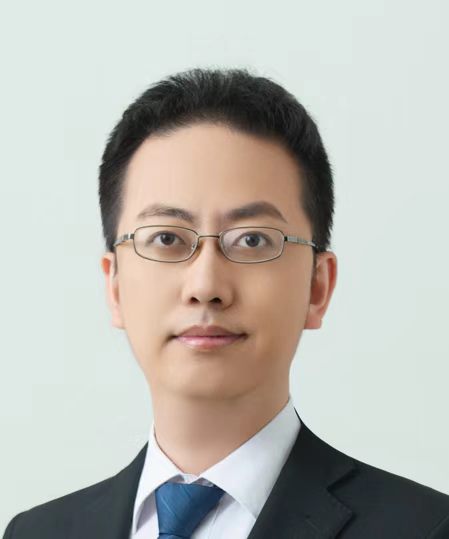
Dr. Renlong Jie |
Northwestern Polytechnical University Associate Professor Renlong Jie is affiliated with Northwestern Polytechnical University in China. He received his Ph.D. degree in Machine Learning from the University of Sydney, Australia, a Master's degree in Statistics from the Australian National University, and a Bachelor's degree in Physics from Nanjing University. After receiving his Ph.D., he has gained two and a half years of industry experience in large language models (LLMs). His current research focuses on human-machine collaboration, AI4Research, and multi-agent systems, with particular interests in hallucination mitigation in generative language models, human-machine collaborative decision-making, and data-driven product analysis and parameter optimization. He has authored a book titled Human-Machine Collaboration and Agent Systems, published 8 papers as first author in top-tier conferences and journals such as AAAI and ACL, and filed and been granted 8 national invention patents. He also leads a key project under the National Key Research and Development Program of China. |
|
Talk Topic Title: From Time to Space: Understanding Hallucination Propagation in LLM-based Agent Systems Abstract: Hallucination in large language models is often studied as an isolated generation error. However, in LLM-based agent systems, errors rarely remain local: they accumulate over time through memory updates, multi-step reasoning, and iterative planning, while also spreading across space through interactions among tools, modules, and multiple agents. This talk revisits hallucination from a temporal-spatial perspective and argues that reliability should be understood not only at the level of single responses, but also at the level of error propagation in dynamic agentic workflows. I will discuss how temporal drift, spatial contamination, and delayed detection emerge in agent systems, why conventional static evaluation is insufficient, and how human intervention can be strategically introduced to monitor, localize, and mitigate propagated errors. The talk concludes with several open research directions toward more reliable, interpretable, and collaborative agent systems. |
|

Prof. Jinliang Deng |
Beihang University Jinliang Deng is a tenure-track Professor at the School of Computer Science and Engineering, Beihang University, and a recipient of China’s National High-Level Overseas Young Talent Program. He received his Ph.D. from the University of Technology Sydney in 2024 and worked as a Postdoctoral Researcher at the Hong Kong University of Science and Technology from 2024 to 2025. His research interests include spatio-temporal data mining, time series analysis, and urban computing. He has published more than 30 papers in leading international conferences and journals, including TKDE, NeurIPS, ICLR, ICDE, and KDD, with over 1,600 citations on Google Scholar. He has received several awards, including the Best Student Paper Award from the Australian Artificial Intelligence Institute and the Runner-up Award for Best Resource Paper at CIKM. |
|
Talk Topic Title: Toward Efficient Time Series Forecasting: From Numerical Patterns to Textual Semantics Abstract: Time series forecasting plays a critical role in real-time monitoring, risk warning, and rapid decision-making in domains such as financial markets and urban systems. In these scenarios, forecasting efficiency is as important as predictive accuracy, since it directly affects practical deployment. In open environments, accurate forecasting depends not only on historical observations but also on external event information. Existing approaches typically use deep models to encode historical sequences and large language models to interpret event texts. However, they often model complex information directly in high-dimensional representation spaces, resulting in substantial computational overhead and limited efficiency. To address this challenge, this talk introduces efficient low-dimensional modeling methods that exploit redundant patterns in both numerical sequences and event semantics. For historical time series, we develop numerical pattern compression methods based on phase encoding and prototype pattern learning to capture periodicity and repetitive structures, achieving around 99% parameter reduction while maintaining forecasting performance. For event texts, we propose a situation-constrained reasoning framework that restricts semantic inference to a finite situation space, such as trend shifts and volatility changes, thereby reducing the complexity of semantic modeling. Experimental results show that, while preserving predictive performance, the proposed approach reduces the training cost of event-semantic modeling by about 50%, substantially improving the efficiency of time series forecasting. |
|
Paper Scope / Topics of Interest
We invite original research papers related to AI and learning for real-world spatiotemporal systems, including (but not limited to) the following topics:
- Spatiotemporal Modeling and Learning
- Spatiotemporal deep learning for transportation, maritime, aviation
- Long-range temporal dependency modeling in large-scale dynamic systems
- Multi-resolution and multi-scale spatiotemporal representations
- Sequence, State-Space, and Generative Models
- State-space and selective state-space models for spatiotemporal data
- Sequence modeling beyond attention (e.g., efficient recurrent and hybrid architectures)
- Generative and diffusion models for spatiotemporal forecasting, simulation, and data recovery
- Probabilistic and uncertainty-aware spatiotemporal modeling
- Graph, Tensor, and High-Order Representations
- Graph and hypergraph neural networks for spatiotemporal systems
- Tensor-based modeling and factorization for multi-modal spatiotemporal data
- High-order interaction modeling across space, time, and modalities
- Geometric and Topological Learning
- Geometry-aware and manifold-based spatiotemporal learning
- Non-Euclidean representations for spatial networks
- Topology-informed learning and persistence-based representations
- Physics-, Constraint-, and Knowledge-Aware Models
- Physics-informed and rule-consistent learning for spatiotemporal systems
- Constraint-aware neural architectures for operational decision support
- Integration of domain knowledge into data-driven spatiotemporal models
- Efficiency, Scalability, and Deployment
- Computationally efficient spatiotemporal models for large-scale systems
- Memory- and energy-efficient learning architectures
- Model compression, approximation, and scalable training strategies
- Real-World Data, Systems, and Decision Support
- Learning from noisy, incomplete, or heterogeneous spatiotemporal data
- AI for operational decision-making in transportation and maritime systems
- Case studies, benchmarks, and real-world deployments
Important Dates
- Workshop Paper Submission Deadline: 6 June 2026
- Workshop Reviews Deadline: 4 July 2026
- Notification of Acceptance or Rejection (Hard Deadline): 10 July 2026
- Camera-Ready Workshop Paper Submission Deadline (Hard Deadline): 18 July 2026
All deadlines and time zones will be announced on the official workshop page.
Submission Instructions
Submission site: https://cmt3.research.microsoft.com/ICANN2026
Submission format: Springer LNCS (Overleaf template)
Submission length: full papers (up to 12 pages)
This workshop uses a double-blind review process.
Accepted papers that comply with the ICANN 2026 regular paper guidelines will be published in the ICANN 2026 Workshop Proceedings.
All papers submitted to the workshop “From Real Systems to AI Solutions: Learning for Spatiotemporal Dynamic” must be submitted via Microsoft CMT through the ICANN 2026 submission portal. Authors are required to submit under the Workshops track and to select “From Real Systems to AI Solutions: Learning for Spatiotemporal Dynamic” as the target workshop. Please note that each workshop is reviewed and managed independently, and submissions made to the wrong workshop may not be considered. This workshop accepts full papers only under the standard ICANN 2026 format. Extended abstracts are not accepted.
Program Schedule (Planned)
| Time | Session | Description |
|---|---|---|
| 13:30 – 13:35 | Opening Remarks | Welcome and workshop overview |
| 13:35 – 14:00 | Keynote Talk 1 | Invited keynote (20 min presentation + 5 min Q&A) Real-world challenges in transportation and maritime systems (proposed) |
| 14:00 – 14:15 | Invited Talk 1 | Invited expert presentation Operational challenges and datasets from real-world spatiotemporal systems (proposed) |
| 14:15 – 15:00 | Regular Paper Presentations I | 3 regular papers × 15 min each |
| 15:00 – 15:30 | Tea Break & Poster Session | Coffee/tea break; poster presentations and informal discussion |
| 15:30 – 15:55 | Keynote Talk 2 | Invited keynote (20 min presentation + 5 min Q&A) AI-driven spatiotemporal modeling for real systems (proposed) |
| 15:55 – 16:10 | Invited Talk 2 | Invited expert presentation Deployment lessons and AI solutions in practice (proposed) |
| 16:10 – 16:55 | Regular Paper Presentations II | 3 regular papers × 15 min each |
| 16:55 – 17:00 | Closing Remarks | Summary and wrap-up |